Sri Lanka showed a remarkable progress in poverty reduction since 1990s; where the poverty incidence was 26.1% in 1990 and it came down to about 4% by 2016. The impact of the COVID-19 pandemic and subsequent economic crisis led to an economic contraction and substantial increase in poverty. The World Bank has since claimed that the poverty incidence increased to about 26% by 2022. Thus, all the gains in reducing poverty over decades were eroded in a couple of years, pushing many families back into poverty. The reasons behind this dramatic change are many and complex. Understanding the policies and processes through which poverty reduced and what caused the reversal of the gains is the necessary first step in formulating a proper strategy to tackle poverty in the future. In this context, the Center for Poverty Analysis (CEPA) has organized a symposium to gather the views of experts, practitioners and other stakeholders to update the understanding of poverty in Sri Lanka and discuss feasible strategies to reduce poverty under current rapidly changing circumstances.
The proposed symposium will review poverty issues through time (Retrospect) in order to broaden the understanding, and focus on measuring and dealing with poverty in the present crisis situation and beyond (Prospect). Understanding the success of previous efforts of poverty reduction with a focus on the applicability of similar approaches in the future, would be one of the outcomes of the symposium.
Dealing with poverty in a crisis situation is much more challenging. Continuous update on the macroeconomic challenges and fall out of these in terms of poverty and inequality has become imperative. The complementarity between the IMF stabilization program and structural reforms that are needed to put the economy back towards a sustainable path of growth is obvious. However, the current emphasis seems to be mainly on stabilization. However, stabilization alone will not be sufficient, as economic growth must play a significant role in creating an enabling environment for poverty reduction. Economic reforms, beyond economic stabilization policies, may disproportionately affect the poor too. Therefore, supplementary policies to minimize the adverse impact of reform on the poor are necessary. Yet, the understanding as well as emphasis on such policies seem to be limited. The symposium discussions therefore would connect the macro issues with more micro/lived experiences of poverty – drawing from the past, present, and global lessons.
The Symposium will attempt to answer the following questions:
- What macroeconomic, targeted or sectoral support and other policies moved people out of poverty in Sri Lanka in the past? Can the same be continued or adapted to the current situation where many avenues that help reduce poverty such as public sector jobs, subsidies, protectionism may not be feasible?
- How do we learn/adapt from the past, what do we need to do differently, and what we must not compromise to remain relevant, responsive, effective and fair in our efforts to reduce poverty?
- What have we learned from the decades of work on poverty measurements? How can poverty measurement be tailor-made to suit a crisis situation?
- How relevant is the need to think beyond income poverty when poverty is widespread? What needs to be done to prevent vulnerable groups such as women bearing the brunt of the crisis and being pushed back to poverty due to external socio-economic, environmental or political reasons?
- How significant will the role of economic growth be in poverty reduction in the post crisis period? How do we ensure that economic growth is inclusive and does not lead to greater marginalization?
- What is the relevance and importance of governance for poverty reduction during crisis and post crisis period? How do we ensure that necessary reforms, democratic processes and accountability measures are in place?
- What lessons can Sri Lanka learn from the experience of these countries who have gone through similar crises?

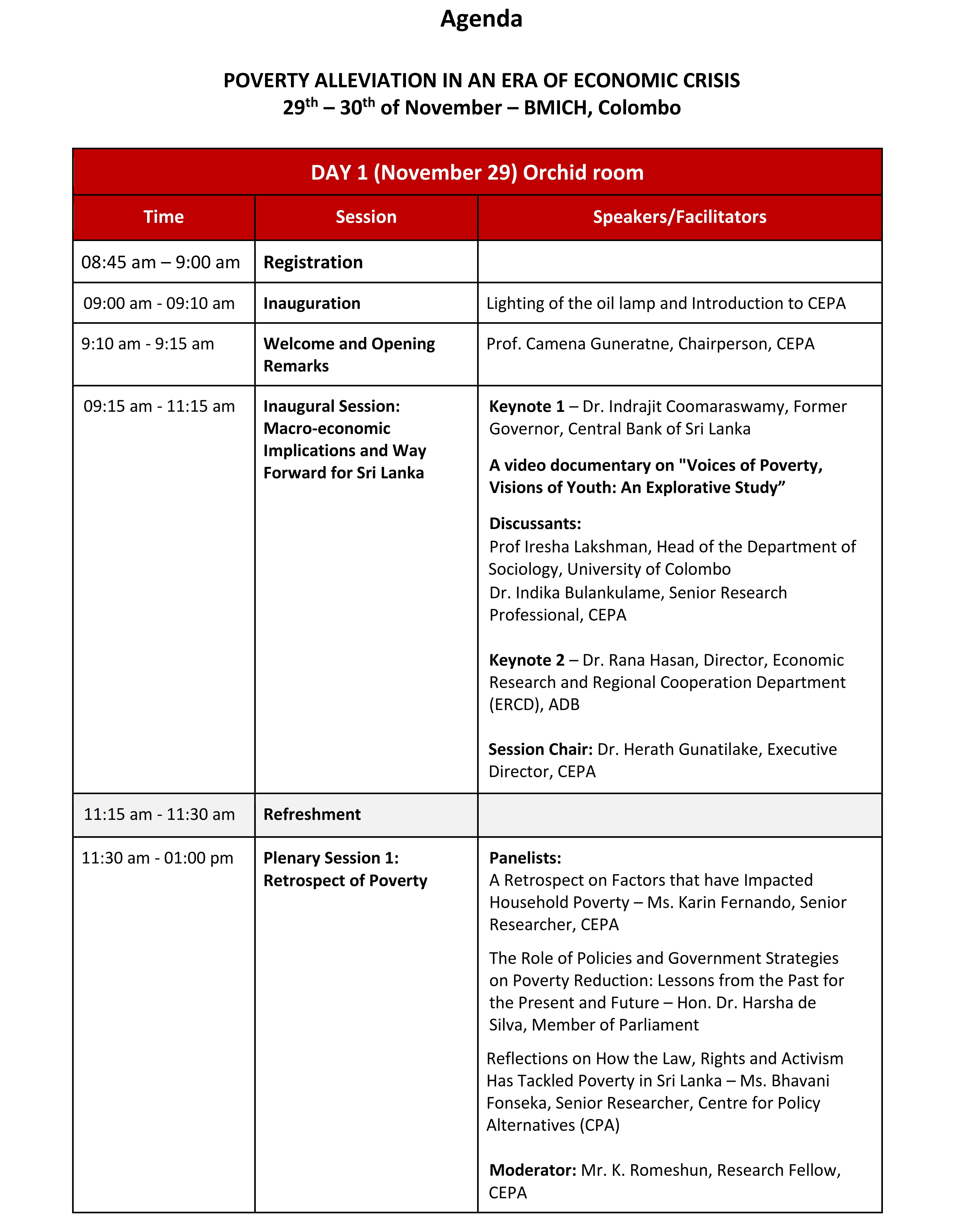
** CEPA Symposium DAY 01 Material
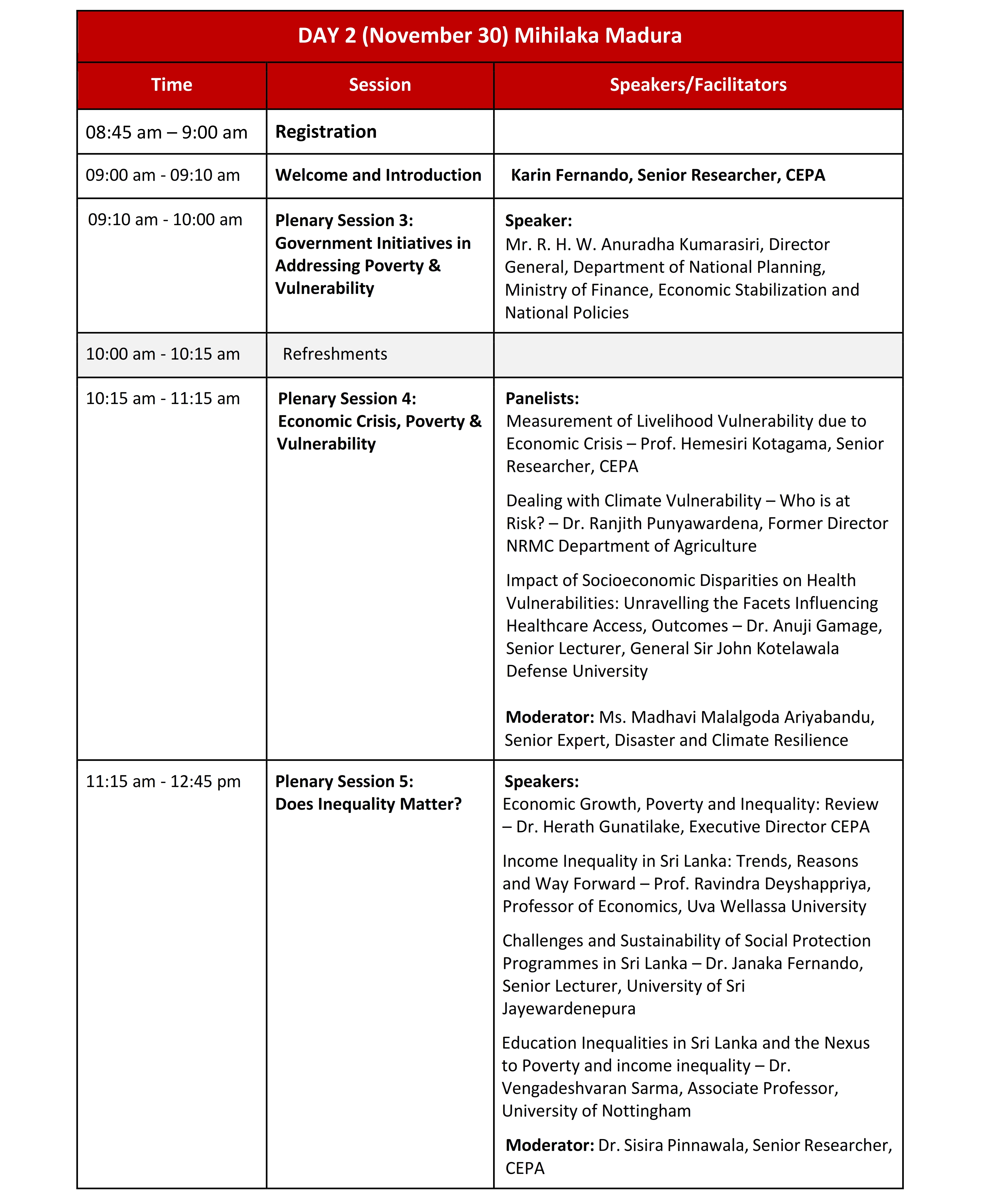
** CEPA Symposium DAY02 Material