Event at University of Ruhuna
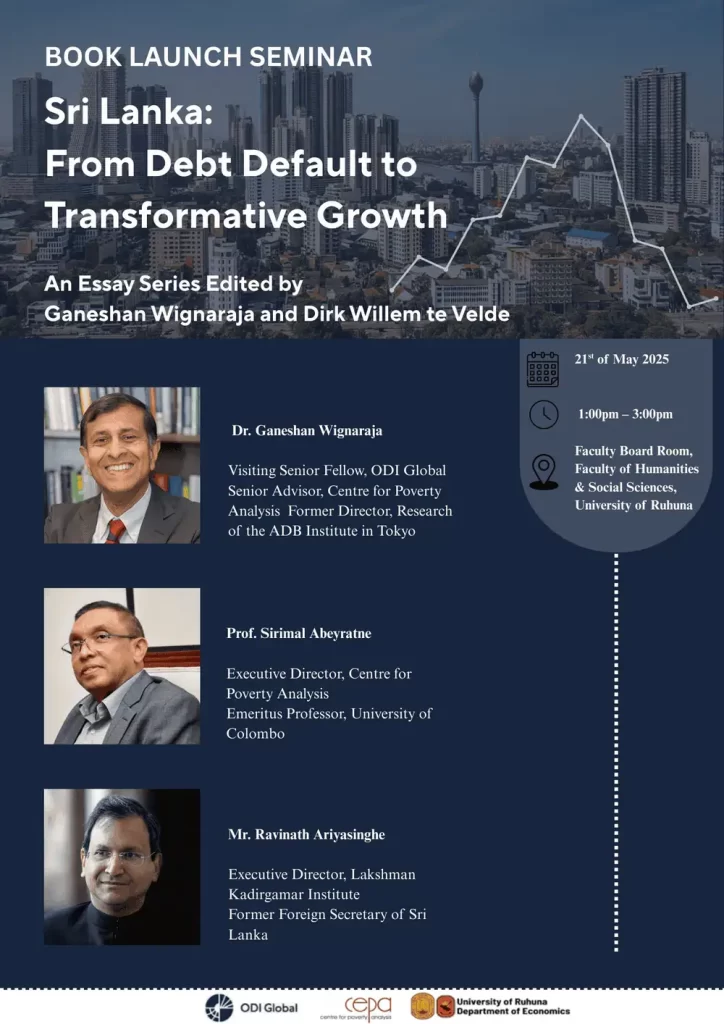
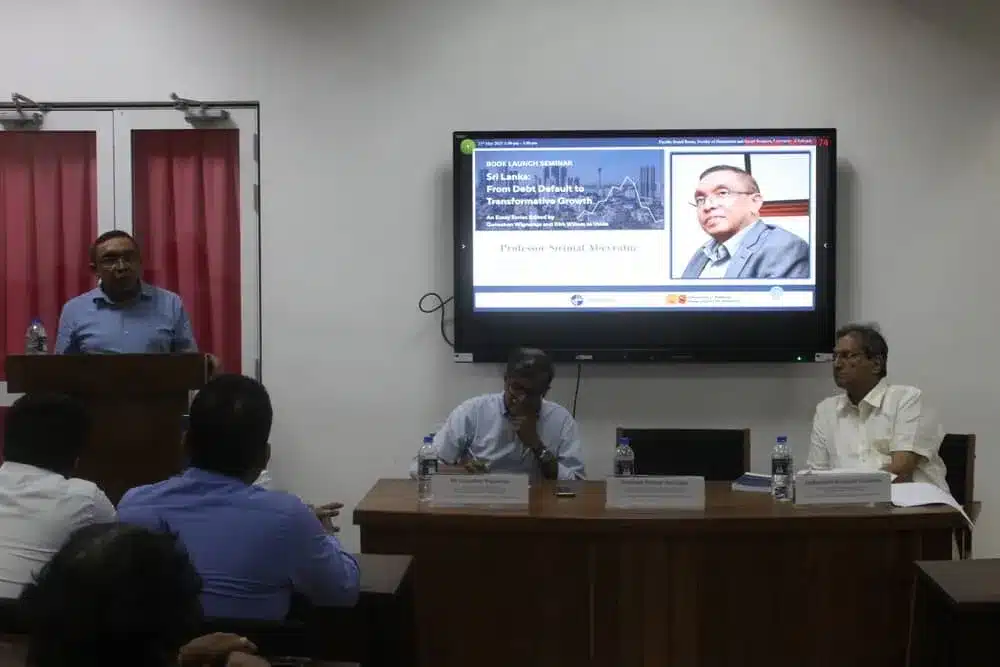
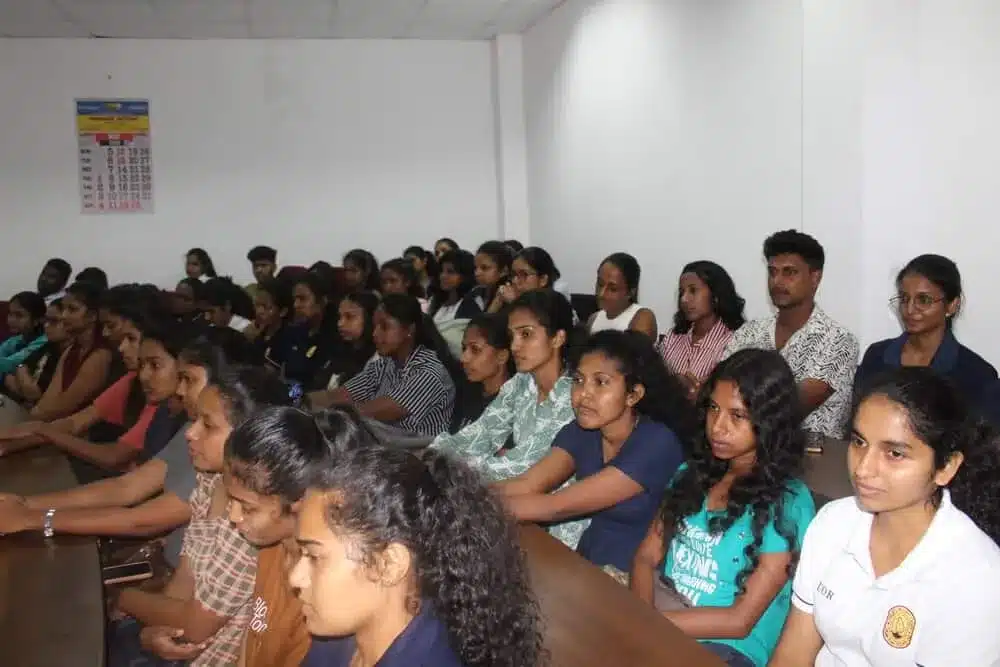
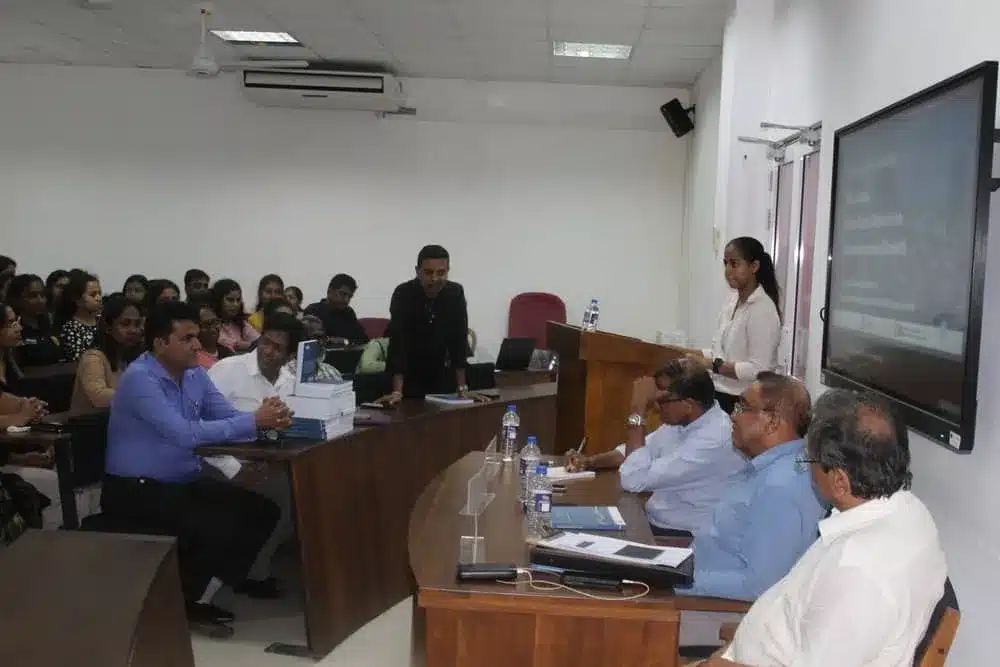
On 21 May 2025, Colombo ODI Global and the Centre for Poverty Analysis (CEPA) jointly hosted a keynote policy dialogue at the University of Ruhuna in Matara, Sri Lanka. The event focused on the book of essays, “Sri Lanka: From Debt Default to Transformative Growth”, written by 24 leading Sri Lankan and international experts. The collection of 14 essays written by 24 leading Sri Lankan and international experts presents 27 actionable policy proposals to guide Sri Lanka towards a sustainable and inclusive economic transformation. The keynote speakers included Dr. Sirimal Abeyratne, Executive Director of CEPA and Emeritus Professor of Economics at the University of Colombo, and Dr. Ganeshan Wignaraja, Visiting Senior Fellow of ODI and co-author of the book. They were joined by Ambassador Ravinath Ariyasinghe, Executive Director of the Lakshman Kadirgamar Institute (LKI). The event was attended by around 100 students and faculty members. The other speakers included, Mr. Renuka Priyantha, Dean of the Faculty of Humanities and Social Sciences, Dr. Nishantha Kurukulasuriya, Head of the Department of Economics, and Professor Nandasiri Keembiyahetti, Associate Professor of the Department of Economics, along with a significant participation from all the faculty members and students of the Department of Economics at the University of Ruhuna.
Dr. Ganeshan Wignaraja outlined Sri Lanka’s shift from debt to growth, reflecting on past challenges and future prospects. Dr. Sirimal Abeyratne discussed the macroeconomic context, highlighting how growth potential is being unlocked through financial consolidation and debt sustainability. He emphasized that stability must be long-term and growth-oriented. Mr. Ravinath Aryasinghe spoke on economic diplomacy, noting the decline in value addition and the limited success of diversification. He stressed the need for alignment between policies and regulations. During the Q&A session, participants raised concerns about the weak link between academic research and policymaking, and the lack of institutionalized economic decision-making. It was noted that Sri Lanka has fewer professional economists in senior advisory roles compared to regional peers, raising questions about state capacity and the role of political advice.